


.png)
Subject: "CQ" (18-year-old Goalkeeper)
Team: Newington F.C.
Objective: Maintaining Elite Readiness During Injury Recovery
Injuries are the ultimate frustration for any athlete, often leading to a loss of match sharpness and physical conditioning. For CQ, a semi-professional goalkeeper playing for Newington F.C., a broken arm threatened to sideline him (and his professional development) entirely. The primary goal was to find a way to train at game-realistic intensities without the physical contact of a real ball or the risk of exacerbating the injury,. Traditional field sessions were too dangerous, yet remaining inactive would lead to a significant drop in "GKIQ" (Goalkeeping Intelligence) and physical readiness.
.png)
When a goalkeeper suffers an upper-body injury, it usually necessitates a complete shutdown of standard training. Cormac faced a six-week recovery period where he could not catch, dive, or risk impact,. Without intervention, this period of inactivity would result in a massive drop in cardiovascular fitness and the dreaded loss of "match sharpness"—the specific timing and decision-making speed required for competitive play.
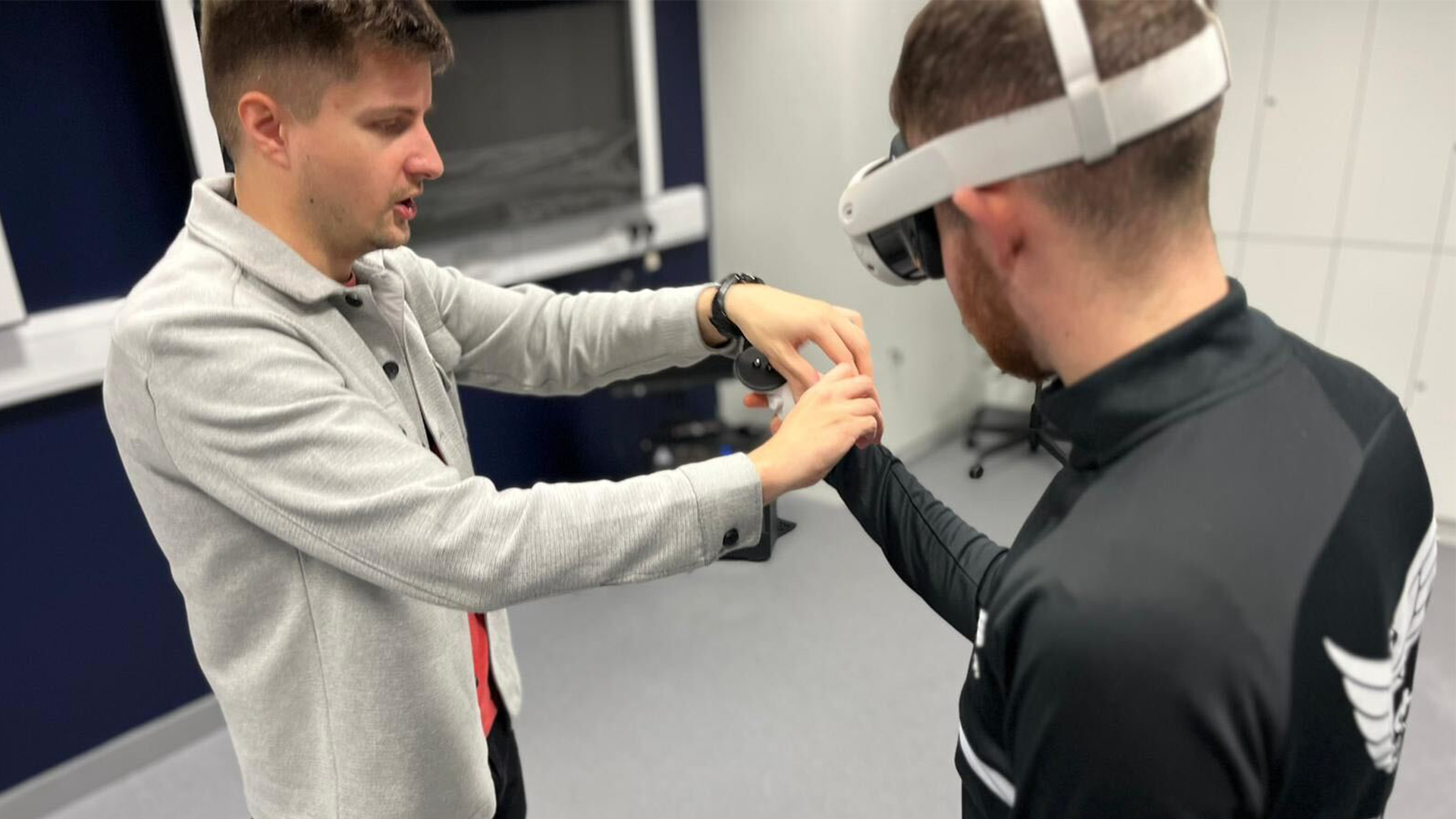
For six weeks, Cormac replaced standard on-field sessions with CleanSheet Pro VR training to maintain his conditioning safely,.
• One-Handed Training: We built a bespoke training program that allowed him to train using only one controller, as his injured hand was in a cast and unable to hold the device.
• "QuickFire" Mode: Cormac utilised the "QuickFire" mode to face hundreds of high-speed shots, requiring rapid reactions without the need to dive or catch a heavy ball.
• Heart Rate Monitoring: To quantify the physiological demand, the sessions were monitored using Polar heart rate tracking to ensure they met elite physical standards.
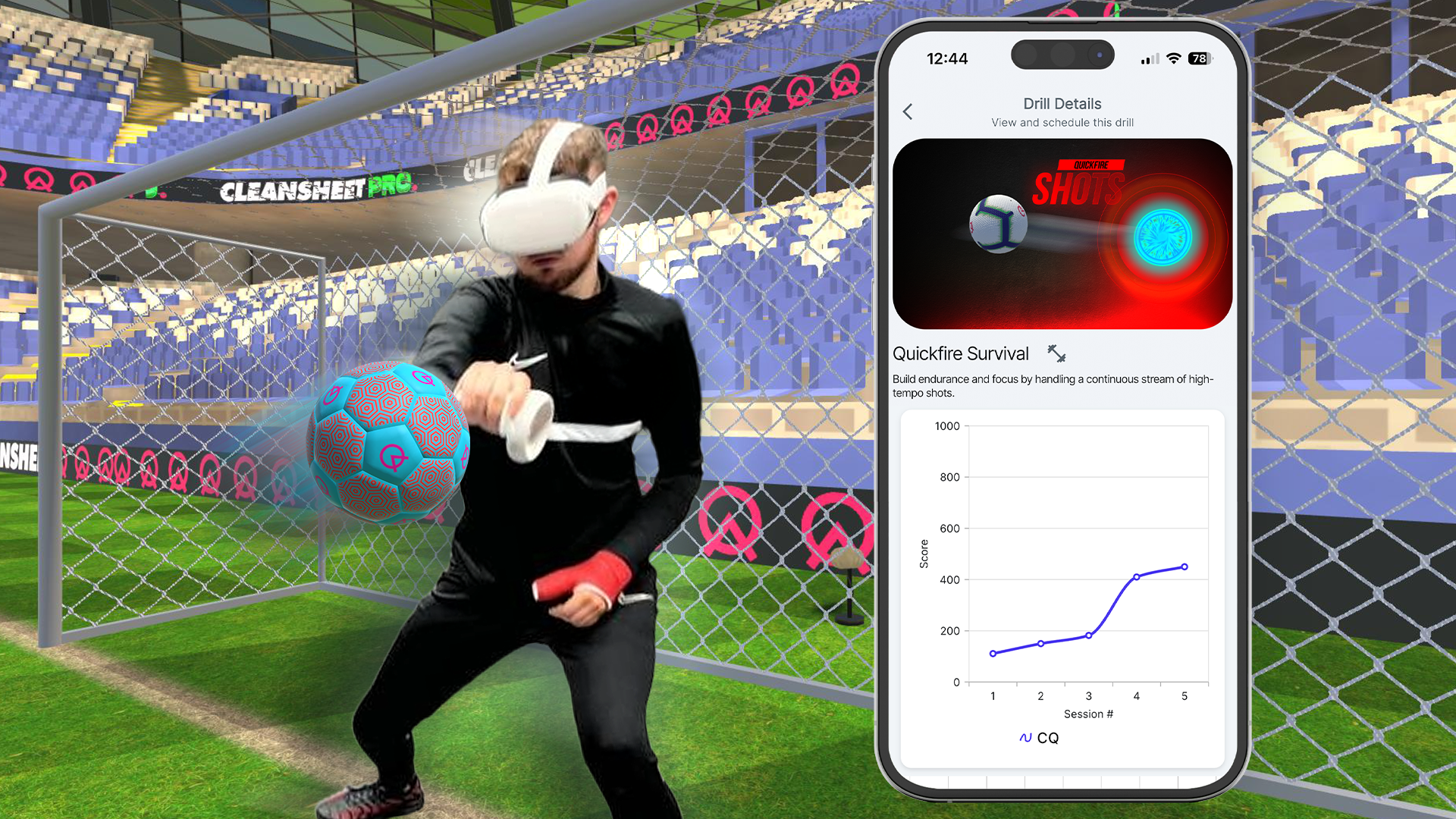
The data revealed that the VR sessions were not just a game, but a legitimate high-intensity cardiovascular tool,. The 15-minute "No Load" session data showed:
Average Heart Rate: 164 bpm (Indicating a sustained high-intensity aerobic effort).
Maximum Heart Rate: 187 bpm (Reaching peak performance zones equivalent to match-day pressure).
Energy Expenditure: 247 kcal burned in just 15 minutes.
Return to Play: By the end of the six-week period, Cormac returned to full team training immediately with zero "rust." His decision-making timing and save success remained at peak levels because he had faced unlimited virtual shots without physical strain.
%20(1920x1080).png)
This case study highlights how CleanSheet Pro serves as a vital rehabilitation and injury-mitigation tool. By allowing injured players to maintain "Tempo & Maximum" heart rate zones and mental sharpness without physical risk, clubs can ensure that physical setbacks do not result in technical or perceptual regressions.
.svg)
.svg)
